

How Does the Monsoon Season Affect Your Teeth and Gums?
How Does the Monsoon Season Affect Your Teeth and Gums?

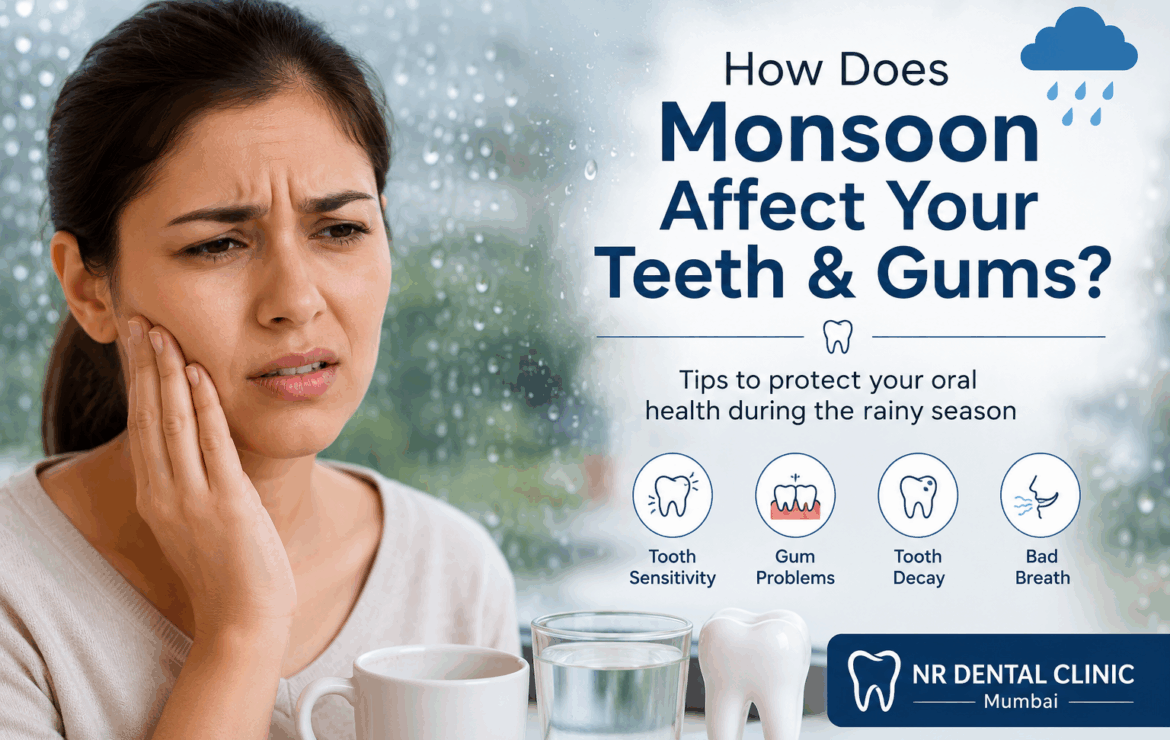
The monsoon season brings relief from the scorching summer heat, but it also creates the perfect environment for several health issues — including dental problems. Increased humidity, bacterial growth, seasonal infections, changes in eating habits, and weakened immunity during monsoon can directly impact your oral health.
Many people notice symptoms like tooth sensitivity, gum swelling, bad breath, mouth ulcers, and tooth pain becoming more common during rainy weather. While most people focus on protecting themselves from colds and infections during monsoon, oral care is often ignored.
At NR Dental Clinic in Mumbai, we often see an increase in patients experiencing dental discomfort during the rainy season. Understanding how monsoon affects your teeth can help you take preventive steps and maintain a healthy smile throughout the season.
Why Do Dental Problems Increase During the Monsoon?
The monsoon season creates conditions that allow bacteria and fungi to grow faster. High moisture levels and fluctuating temperatures can affect oral hygiene and increase the chances of infections.
Several factors contribute to dental issues during monsoon:
- Increased bacterial growth due to humidity
- Higher intake of sugary snacks and hot beverages
- Reduced water intake
- Seasonal illnesses affecting immunity
- Poor oral hygiene habits during rainy days
- Consumption of contaminated food or water
These conditions can trigger gum infections, cavities, plaque buildup, and bad breath if oral care is neglected.
Can Humidity During Monsoon Cause Tooth Problems?
Yes, humidity can indirectly affect your oral health.
During monsoon, excess moisture in the environment promotes bacterial growth inside the mouth. Harmful bacteria thrive in warm and humid conditions, increasing the risk of:
- Tooth decay
- Gum infections
- Plaque formation
- Bad breath
- Mouth infections
Humidity can also worsen existing dental conditions. If you already have cavities, gum disease, or sensitivity, symptoms may become more noticeable during the rainy season.
Why Do Teeth Become Sensitive During Rainy Weather?
Many people experience sudden tooth sensitivity during monsoon. This usually happens because of temperature changes and underlying enamel damage.
Common causes include:
1. Temperature Fluctuations
Switching between hot tea, coffee, soups, and cold weather can affect sensitive teeth.
2. Weak Tooth Enamel
If the enamel is already worn down, nerves inside the teeth become exposed, causing discomfort while eating or drinking.
3. Gum Recession
Gums may become swollen or infected during monsoon, exposing tooth roots and increasing sensitivity.
4. Existing Cavities
Untreated cavities often become more painful during seasonal weather changes.
If sensitivity continues for several days, it is important to get a dental checkup before the condition worsens.
Does Monsoon Increase the Risk of Gum Disease?
Yes, gum problems are very common during the monsoon season.
Humidity and bacterial buildup can irritate the gums and lead to infections. People with weak immunity or poor oral hygiene are more likely to develop gum disease during this season.
Signs of gum disease include:
- Bleeding gums
- Swollen gums
- Redness around teeth
- Pain while brushing
- Persistent bad breath
- Gum tenderness
Ignoring these symptoms may lead to gingivitis or periodontitis, which can eventually damage teeth and bone structure.
Maintaining proper oral hygiene and regular dental cleaning can help prevent gum problems during monsoon.
Why Is Bad Breath More Common During Monsoon?
Bad breath, also called halitosis, becomes more common during rainy weather because bacteria multiply faster in humid conditions.
Other contributing factors include:
- Dry mouth due to low water intake
- Poor digestion
- Gum infections
- Food particles stuck between teeth
- Excess tea and coffee consumption
- Smoking and tobacco use
When bacteria accumulate on the tongue and gums, they release foul-smelling sulfur compounds that cause unpleasant breath.
To prevent bad breath during monsoon:
- Brush twice daily
- Clean your tongue regularly
- Use dental floss
- Drink enough water
- Avoid excessive sugary foods
Professional dental cleaning can also help remove plaque and bacteria responsible for chronic bad breath.
Can Monsoon Cause Tooth Pain?
Tooth pain during monsoon is surprisingly common.
Changes in atmospheric pressure and humidity may affect teeth that already have hidden dental issues. Conditions like cavities, cracked teeth, infections, or gum inflammation can become more painful during rainy weather.
Common reasons for monsoon tooth pain include:
- Deep cavities
- Tooth infections
- Wisdom tooth issues
- Sinus pressure
- Gum swelling
- Teeth grinding caused by stress
Sometimes people ignore mild tooth pain until monsoon makes it worse. Early diagnosis helps prevent serious complications and expensive treatments later.
Which Foods Should You Avoid During the Monsoon for Better Oral Health?
Diet plays a major role in oral health during the rainy season.
People often consume more fried snacks, sweets, tea, and sugary drinks during monsoon, which can increase the risk of cavities and plaque buildup.
Foods to limit during monsoon include:
Sugary Snacks
Candies, chocolates, and desserts feed harmful bacteria that produce acids causing tooth decay.
Sticky Foods
Sticky snacks remain attached to teeth for longer periods, increasing bacterial growth.
Carbonated Drinks
Soft drinks weaken enamel and increase sensitivity.
Excessive Tea and Coffee
These beverages can stain teeth and contribute to dryness in the mouth.
Street Food
Contaminated food may increase the risk of oral infections and ulcers.
What Are the Best Foods for Healthy Teeth During Monsoon?
A healthy diet helps strengthen teeth and gums during seasonal changes.
Recommended foods include:
- Fresh fruits rich in Vitamin C
- Leafy green vegetables
- Dairy products like milk and yogurt
- Nuts and seeds
- Fiber-rich foods
- Plenty of water
Crunchy fruits and vegetables also help clean teeth naturally by reducing plaque buildup.
How Can You Protect Your Teeth During the Monsoon Season?
Maintaining oral hygiene becomes even more important during monsoon.
Here are some effective dental care tips:
Brush Twice Daily
Use a fluoride toothpaste and brush for at least two minutes.
Use an Antibacterial Mouthwash
This helps reduce bacteria and prevents gum infections.
Floss Regularly
Floss removes food particles trapped between teeth where bacteria grow.
Stay Hydrated
Drink enough water to maintain saliva production and reduce bacterial growth.
Avoid Excess Sugar
Reducing sugary foods lowers the risk of cavities.
Replace Your Toothbrush
Moist conditions can allow bacteria to grow on toothbrush bristles. Replace your toothbrush every 3 months or sooner if needed.
Keep Dental Appliances Clean
If you wear braces, aligners, or dentures, clean them thoroughly to prevent fungal and bacterial infections.
Are Mouth Ulcers More Common During Monsoon?
Yes, many people experience mouth ulcers during monsoon due to weakened immunity, infections, stress, or nutritional deficiencies.
Common triggers include:
- Spicy foods
- Poor digestion
- Vitamin deficiencies
- Stress and fatigue
- Bacterial infections
Most ulcers heal within a week, but persistent or painful ulcers should be evaluated by a dentist.
Can Children Experience More Dental Problems During Monsoon?
Children are especially vulnerable to dental issues during the rainy season because they often consume more sweets and may neglect oral hygiene.
Common monsoon dental problems in children include:
- Cavities
- Gum infections
- Mouth ulcers
- Tooth sensitivity
- Bad breath
Parents should encourage children to:
- Brush properly twice daily
- Avoid excessive chocolates and candies
- Drink clean water
- Maintain regular dental checkups
Early dental care helps prevent long-term oral health problems.
Is It Safe to Delay Dental Treatment During Monsoon?
Many people postpone dental visits during rainy weather, but delaying treatment can make problems worse.
Ignoring symptoms like pain, bleeding gums, swelling, or sensitivity may lead to:
- Severe infections
- Root canal complications
- Tooth loss
- Gum disease progression
- Increased treatment costs
Regular dental checkups help identify issues before they become serious.
When Should You Visit a Dentist During the Monsoon?
You should schedule a dental consultation if you experience:
- Persistent tooth pain
- Bleeding gums
- Swollen gums
- Severe sensitivity
- Bad breath that does not improve
- Mouth ulcers lasting more than 2 weeks
- Difficulty chewing
- Tooth swelling or pus
Early treatment prevents complications and protects your overall oral health.
How Does Professional Dental Cleaning Help During Monsoon?
Professional dental cleaning removes plaque, tartar, and bacteria that regular brushing cannot eliminate completely.
Benefits of dental cleaning during monsoon include:
- Reduced risk of cavities
- Healthier gums
- Fresher breath
- Removal of stains
- Prevention of gum disease
- Better overall oral hygiene
Routine cleanings also allow dentists to detect early signs of dental problems before they become severe.
What Oral Hygiene Routine Should You Follow During Monsoon?
A proper monsoon dental care routine should include:
Morning
- Brush teeth with fluoride toothpaste
- Clean tongue
- Rinse with mouthwash
After Meals
- Rinse mouth with water
- Avoid leaving sugary foods on teeth
Night
- Brush and floss before sleeping
- Avoid late-night snacking
Consistency is the key to preventing seasonal dental issues.
Can Seasonal Illnesses Affect Oral Health?
Yes, seasonal illnesses like cold, flu, fever, and sinus infections can impact your teeth and gums.
Some common effects include:
- Dry mouth due to medications
- Increased acidity in the mouth
- Tooth pain linked to sinus pressure
- Mouth ulcers caused by weakened immunity
Maintaining hydration and oral hygiene during illness is extremely important.
Why Is Preventive Dental Care Important During Monsoon?
Preventive dental care helps avoid painful and costly dental problems later.
Regular checkups allow dentists to:
- Detect cavities early
- Treat gum disease before progression
- Identify infections
- Remove plaque buildup
- Provide personalized oral hygiene guidance
Prevention is always easier and more affordable than emergency dental treatment.
Final Thoughts: How Can You Keep Your Smile Healthy This Monsoon?
Monsoon weather may create ideal conditions for bacteria and oral infections, but proper dental care can help you maintain healthy teeth and gums throughout the season.
Simple habits like brushing regularly, eating healthy foods, staying hydrated, and visiting your dentist on time can significantly reduce the risk of monsoon-related dental problems.
If you are experiencing tooth pain, gum issues, sensitivity, or bad breath during the rainy season, seeking professional dental care early can help prevent serious complications.
At NR Dental Clinic in Mumbai, prioritizing preventive dental care during monsoon can help patients maintain strong, healthy smiles all year round.
Related posts


Recent Posts

Invisible Braces: Perfect Teeth Straightener

How to Choose the Right Dentist in Mumbai

“I have been coming to Dr. Nikhil Sathe for my son’s orthodontic treatment and am very happy with the results as there is a drastic improvement in what his teeth looked like and how they are now! I highly recommend him to everyone looking for braces or Invisalign treatment! I’m definitely getting my younger one here too.”

Abhikant Yadav
“Dr. Sathe is amazing at what he does and I am thrilled with the way my smile has turned out! He is genuinely humble, kind and a highly skilled orthodontist! From the initial consultation to the final results, the entire process has been very seamless. The entire team of doctors are very good at what they do ? Big thanks for the epic transformation! Highly appreciate and recommend!”

Anissha Khanna
“The treatment’s been super effective, and we’re thrilled with how it’s going! Those ceramic braces are practically invisible. Dr. Sathe’s way of going about the treatment is very proficient. I’d definitely recommend checking him out!”

