

Why Is Professional Teeth Treatment Important for Long-Term Oral Health?
Why Is Professional Teeth Treatment Important for Long-Term Oral Health?

Healthy teeth are essential not only for a beautiful smile but also for overall health and confidence. Many people ignore early signs of dental problems such as tooth sensitivity, gum bleeding, cavities, bad breath, or discoloration until the condition becomes severe. Professional teeth treatment helps diagnose, prevent, and treat dental issues before they lead to pain, infections, or tooth loss.
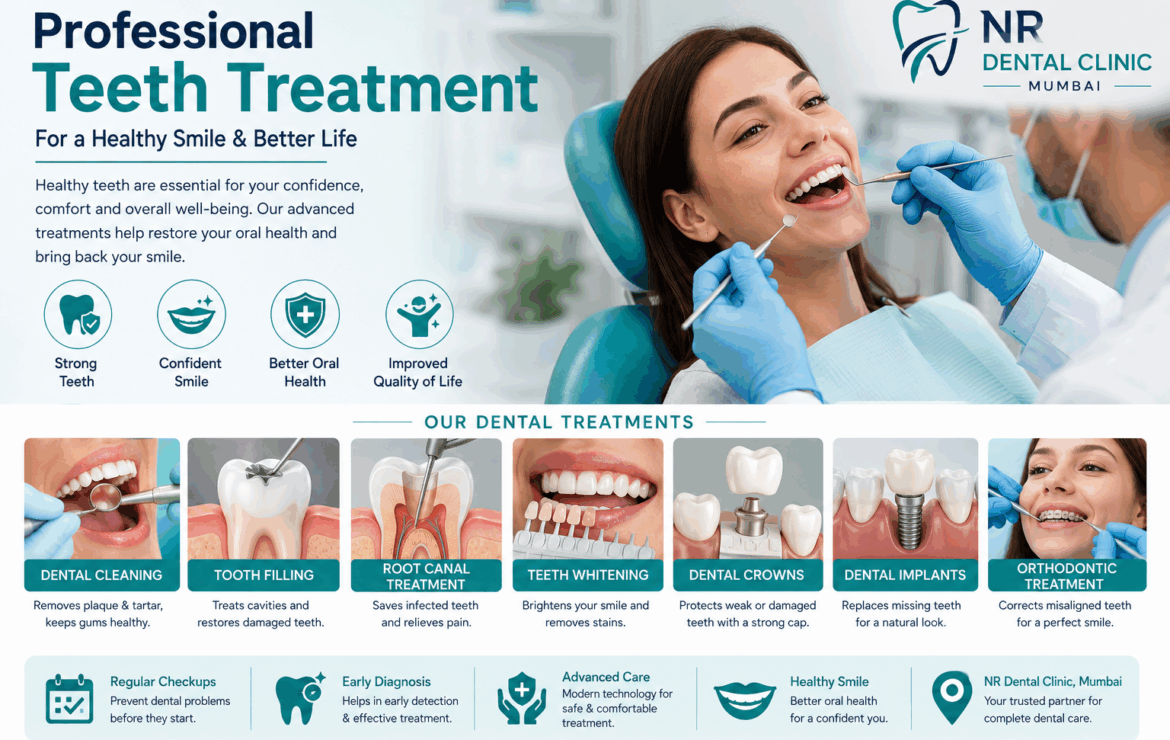
Modern dentistry offers a wide range of treatments that improve both oral health and smile aesthetics. From routine dental cleanings and cavity fillings to root canal treatment, teeth whitening, dental crowns, and smile correction procedures, timely dental care can help maintain strong and healthy teeth for years.
At NR Dental Clinic in Mumbai, patients can benefit from advanced dental treatments designed to restore oral health, improve comfort, and enhance smile appearance.
What Are the Most Common Teeth Problems That Require Treatment?
Dental issues can affect people of all ages. Some problems develop slowly over time, while others may appear suddenly due to infection, injury, or poor oral hygiene.
Common dental problems include:
- Tooth decay and cavities
- Gum disease
- Tooth sensitivity
- Tooth pain
- Broken or chipped teeth
- Bad breath
- Yellow or stained teeth
- Missing teeth
- Crooked or misaligned teeth
- Wisdom tooth pain
Ignoring these conditions can lead to severe infections, gum damage, or permanent tooth loss.
How Does Tooth Decay Develop?
Tooth decay occurs when plaque bacteria produce acids that damage the tooth enamel. Poor oral hygiene, sugary foods, and irregular dental care increase the risk of cavities.
Early symptoms of tooth decay may include:
- Sensitivity to hot or cold foods
- Mild tooth pain
- Visible holes or dark spots on teeth
- Food getting stuck between teeth
- Bad breath
If untreated, cavities can spread deeper into the tooth and affect the nerves, requiring advanced treatment such as root canal therapy.
What Is Dental Cleaning and Why Is It Necessary?
Professional dental cleaning removes plaque, tartar, and bacteria that regular brushing cannot completely eliminate.
Benefits of professional teeth cleaning include:
- Prevention of cavities
- Healthier gums
- Fresher breath
- Reduced plaque buildup
- Removal of stains
- Early detection of dental issues
Routine dental cleaning is an important part of preventive oral healthcare and helps maintain strong teeth and healthy gums.
When Do You Need a Tooth Filling?
Dental fillings are used to restore teeth damaged by cavities or minor fractures.
Signs that may indicate the need for a filling include:
- Tooth sensitivity
- Pain while chewing
- Small holes in teeth
- Food trapping between teeth
- Mild toothache
During the procedure, the decayed portion of the tooth is removed and replaced with a filling material that restores the tooth’s structure and function.
What Is Root Canal Treatment and When Is It Needed?
Root canal treatment is performed when the inner pulp of the tooth becomes infected or inflamed due to deep decay, injury, or cracks.
Common symptoms include:
- Severe tooth pain
- Swelling around the gums
- Sensitivity lasting for a long time
- Pain while biting
- Pus formation near the tooth
Root canal treatment helps save the natural tooth by removing the infected pulp, cleaning the root canals, and sealing the tooth properly.
Can Teeth Whitening Improve Smile Appearance?
Yes, teeth whitening is one of the most popular cosmetic dental treatments for improving smile aesthetics.
Teeth may become stained due to:
- Tea and coffee
- Smoking
- Tobacco use
- Poor oral hygiene
- Aging
- Colored foods and beverages
Professional whitening treatments help remove stains and brighten teeth safely under dental supervision.
What Are Dental Crowns Used For?
Dental crowns are protective caps placed over damaged or weakened teeth to restore strength, appearance, and function.
Crowns are commonly recommended for:
- Broken teeth
- Root canal-treated teeth
- Large cavities
- Severely worn teeth
- Cosmetic smile improvement
They help protect teeth from further damage while improving chewing ability and appearance.
How Can Missing Teeth Be Replaced?
Missing teeth can affect speech, chewing, facial appearance, and confidence. Modern dentistry provides several solutions for tooth replacement.
Common replacement options include:
Dental Implants
Dental implants are artificial tooth roots placed into the jawbone to support replacement teeth.
Dental Bridges
Bridges replace one or more missing teeth using support from nearby teeth.
Dentures
Dentures are removable appliances used to replace multiple missing teeth.
Replacing missing teeth helps restore oral function and prevents shifting of surrounding teeth.
What Is Orthodontic Treatment?
Orthodontic treatment helps correct crooked, crowded, or misaligned teeth.
Common orthodontic solutions include:
- Metal braces
- Ceramic braces
- Clear aligners
- Retainers
Benefits of orthodontic treatment include:
- Improved smile appearance
- Better bite alignment
- Easier cleaning of teeth
- Reduced risk of cavities and gum disease
Properly aligned teeth also improve overall oral health and confidence.
Why Is Gum Treatment Important?
Healthy gums are essential for supporting teeth and maintaining oral health.
Gum disease develops due to plaque buildup and bacterial infection around the gums.
Common signs include:
- Bleeding gums
- Swelling
- Bad breath
- Gum recession
- Loose teeth
Professional gum treatment helps remove infection and prevent long-term damage to the gums and bone structure.
How Often Should You Visit a Dentist?
Regular dental checkups help identify problems early and prevent complications.
Most dentists recommend visiting every six months for:
- Oral examination
- Professional cleaning
- Cavity detection
- Gum health evaluation
- Preventive dental care
People with gum disease, braces, or ongoing dental issues may require more frequent visits.
What Are the Benefits of Preventive Dental Care?
Preventive dental care focuses on avoiding dental problems before they become severe.
Benefits include:
- Lower treatment costs
- Reduced risk of tooth loss
- Healthier gums
- Early detection of cavities
- Better oral hygiene
- Improved overall health
Simple habits like brushing, flossing, healthy eating, and regular checkups can significantly improve oral health.
Can Poor Oral Health Affect Overall Health?
Yes, oral health is closely connected to overall body health.
Untreated dental infections and gum disease may contribute to:
- Heart disease
- Diabetes complications
- Respiratory infections
- Chronic inflammation
- Poor nutrition
Maintaining healthy teeth and gums supports better overall wellness and quality of life.
How Can You Maintain Healthy Teeth at Home?
Good daily habits are essential for long-term oral health.
Important oral care tips include:
- Brush twice daily using fluoride toothpaste
- Floss regularly
- Limit sugary foods and drinks
- Drink enough water
- Avoid tobacco products
- Replace toothbrushes regularly
- Visit your dentist routinely
Consistency in oral hygiene helps prevent cavities, gum disease, and bad breath.
When Should You Seek Immediate Dental Treatment?
You should visit a dentist immediately if you experience:
- Severe tooth pain
- Swelling in the gums or face
- Bleeding that does not stop
- Broken teeth
- Loose teeth
- Difficulty chewing
- Persistent mouth ulcers
Early treatment can prevent complications and protect your natural teeth.
Final Thoughts on Teeth Treatment
Dental treatment plays a vital role in maintaining healthy teeth, strong gums, and overall oral wellness. Whether it is preventive care, restorative treatment, or cosmetic dentistry, timely dental attention helps prevent discomfort and improves quality of life.
Modern dental procedures are safer, faster, and more comfortable than ever before, making it easier for people to maintain healthy and confident smiles.
At NR Dental Clinic in Mumbai, professional dental care and personalized treatment plans can help patients achieve long-term oral health and smile confidence.
Related posts

Recent Posts


Root Canal Treatment in Mumbai

“I have been coming to Dr. Nikhil Sathe for my son’s orthodontic treatment and am very happy with the results as there is a drastic improvement in what his teeth looked like and how they are now! I highly recommend him to everyone looking for braces or Invisalign treatment! I’m definitely getting my younger one here too.”

Abhikant Yadav
“Dr. Sathe is amazing at what he does and I am thrilled with the way my smile has turned out! He is genuinely humble, kind and a highly skilled orthodontist! From the initial consultation to the final results, the entire process has been very seamless. The entire team of doctors are very good at what they do ? Big thanks for the epic transformation! Highly appreciate and recommend!”

Anissha Khanna
“The treatment’s been super effective, and we’re thrilled with how it’s going! Those ceramic braces are practically invisible. Dr. Sathe’s way of going about the treatment is very proficient. I’d definitely recommend checking him out!”

